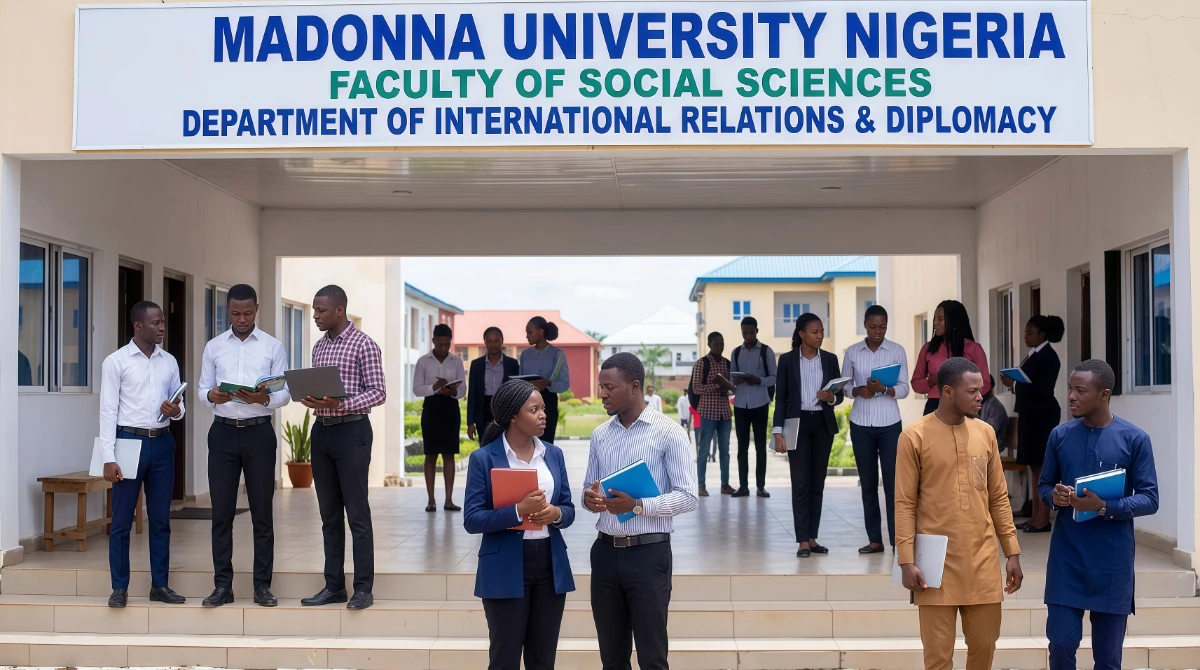
International
Relations
Developing intellectually sound leaders equipped to navigate the complex intersection of global politics, diplomacy, and socio-economic development.
Foundations of Global Study
The Department of International Relations was established by the Senate of Madonna University on February 19, 2014, at the main campus in Elele. Following approval from the National Universities Commission (NUC), the department began admitting students into its four-year B.Sc degree programme during the 2014/2015 academic session.
Our rationale is centered on producing highly skilled manpower capable of driving Nigeria's economic and political growth within the comity of nations, endowed with the moral courage to lead with integrity and without fear or favour.
The Vision of Global Competence
Strategic Goals
Stimulate student appreciation of international relations theories and apply them to national and international contexts.
Develop the ability to apply analytical tools and knowledge to find sustainable solutions to international problems.
Equip students with a broad range of professional skills relevant to both governmental and non-governmental agencies.
Provide a multidisciplinary foundation for advanced studies in the field of International Relations.
Foster an understanding of the importance of global peace and security in national political and economic development.
Produce graduates capable of operating with intellectual rigor in diverse diplomatic and social-economic environments.
Admission Requirements
UTME Admission
Minimum requirement is a credit level pass in SSCE or GCE ‘O’ level in five subjects including Mathematics, English Language, and Government or History.
Direct Entry
Open to holders of a National Diploma (at least merit pass), NCE in relevant courses, or two advanced level papers in GCE, alongside minimum entry requirements.
Transfer Policy
Eligibility
Transfers are accepted for candidates who meet the minimum departmental requirements and GPA standards. Official transcripts must be submitted directly to the university.
Scope of Studies
The B.Sc curriculum provides a comprehensive foundation in the discipline, blending theoretical rigor with practical application across various international domains.
Core Stress Areas
Elite Career Pathways
Career Diplomat
Serving as Ambassadors, Consuls, or Attachés within the Federal Ministry of Foreign Affairs.
International Civil Servant
Strategic roles within the United Nations (UN), African Union (AU), or ECOWAS.
NGO Strategist
Managing operations for International Non-Governmental Organizations (INGOs) on global issues.
Political Analyst
Providing high-level intelligence and analysis for government parastatals and think-tanks.
Foreign Service Officer
Managing bilateral and multilateral relations between Nigeria and the global community.
Academic Scholar
Advancing the discipline of IR through university lecturing and high-impact research.
Trade Negotiator
Designing and negotiating international trade agreements and economic partnerships.
Conflict Mediator
Specializing in peace-building and conflict resolution for international security agencies.
Human Rights Advocate
Monitoring and ensuring international law compliance in global human rights frameworks.
Foreign Policy Advisor
Shaping national strategic interests through evidence-based foreign policy design.
Lead the Global Stage
Enter the world of high-stakes diplomacy and strategic analysis. Join the International Relations department and shape the future of global governance.