Madonna University, Nigeria

Department Of Mechanical Engineering

MECHANICAL
Faculty of Engineering · Mechanical Engineering
Faculty of Engineering

Mechanical
Engineering

Designing the future of motion and energy through the study of machines, thermodynamics, manufacturing, and applied physical systems.

Madonna University, Nigeria
Akpugo Campus · Engineering
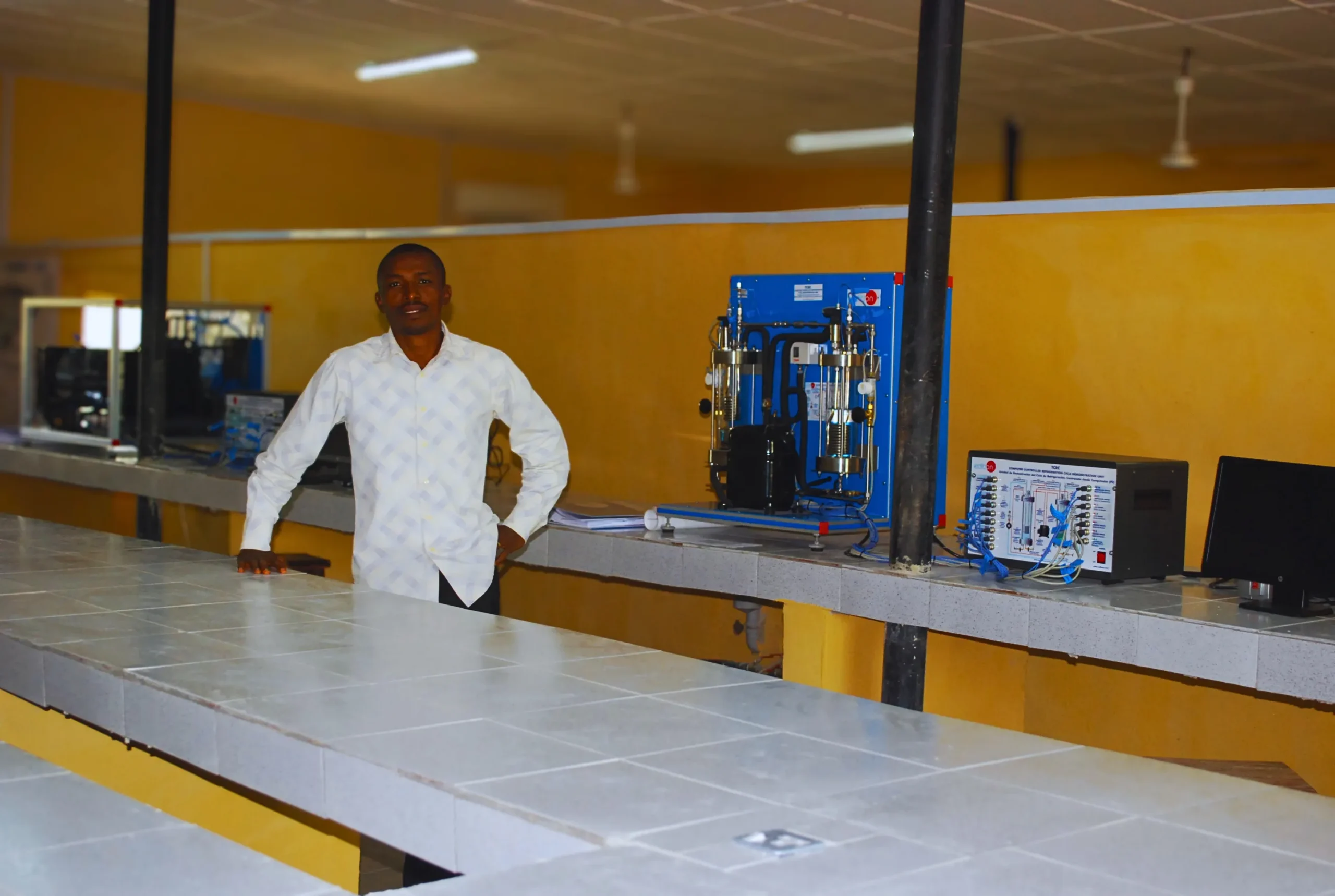
Mechanical Engineering
B.Eng
Degree Programme
Akpugo
Campus
COREN
Professional Path
Mechanical Engineering
Departmental Background

Mechanical Engineering

Mechanical Engineering is a cornerstone of industrial development, training students to master the intersection of energy, materials, and motion to create efficient production systems.

The department emphasizes the synergy between rigorous theoretical calculation and practical application—focusing on technical drawings, precise fabrication, and the exhaustive analysis of engineered systems.

KINETIC
Departmental Core

Our Philosophy

Mechanical engineering education is rooted in the belief that solving real physical problems requires a combination of mathematical discipline, extreme precision, and intuitive design.

Practice and Service

The department encourages students to master the critical connections between material science, thermodynamics, fluid motion, and advanced manufacturing.

Professional Readiness

We blend rigorous theoretical study with intensive hands-on workshop practice, ensuring graduates can seamlessly transition into industrial design and maintenance.

Programme Design

Strategic Objectives

Equip students with the technical expertise to accurately prepare, read, and analyze complex engineering drawings and schematics.

Train graduates to design, manufacture, and assemble precision engineering components and integrated industrial systems.

Develop the analytical capability to solve critical engineering problems through rigorous mathematical calculation and physical analysis.

Provide the practical skills necessary to install, operate, maintain, and service high-capacity plant machinery and industrial equipment.

Academic Framework

Programme Standards

Core Scope

Primary Disciplines

  • Thermodynamics and power
  • Manufacturing and production
  • Fluid flow and materials
  • HVAC and machine systems
Admission

Entry Requirements

  • UTME or Direct Entry candidates
  • Strong science and mathematics foundation
  • Focus on design, plant work, and maintenance
Outcomes

Professional Aim

  • Mastery of machinery design
  • Efficient energy system management
  • Industrial scale-up expertise
  • Licensed Mechanical Engineer
Curriculum Design

Programme Focus & Scope

The Mechanical Engineering programme is meticulously structured to transition students from general engineering fundamentals to advanced specializations. The curriculum balances the laws of physics—specifically heat, fluid, and energy—with the practical necessity of manufacturing and maintenance, ensuring graduates can lead in an era of rapid technological shift.

  • Key Focus: Thermo-Fluid Sciences & Design
  • Academic Path: B.Eng in Mechanical Engineering
  • Core Training: Machine Design & Fabrication
  • Outcome: Licensed Professional Engineer
Registration & Entry

Admission Requirements

Entry Pathways

Admission into the B.Eng. in Mechanical Engineering is managed through a dual-track system to accommodate varying academic backgrounds:

  • UTME Track: Requires 5 credit passes in SSCE/GCE, including English, Mathematics, Physics, and Chemistry.
  • Direct Entry: Open to candidates with GCE 'A' levels or HND/OND holders in related fields.
  • Core Requirements: Strong foundational knowledge in Mathematics and Physics is essential.

Academic progression

The programme is structured in tiers to ensure professional competence:

  • Foundation (Years 1-2): Common basic sciences and foundation engineering courses.
  • Advanced Study (Years 3-4): Focused study in mechanics, thermodynamics, and metallurgy.
  • Specialization (Year 5): Advanced thermo-fluid sciences and mandatory thesis project.

Faculty Transfers

Inter-departmental transfers are permitted after one academic year, subject to institutional standards:

  • Minimum CGPA of 1.00.
  • Formal application to the University Registrar.
  • Approval by Faculty and Departmental Boards and the University Senate.
  • Completion of all transfer procedures before the registration week.
SYSTEMS
Future Outlook

Professional Career Pathways

Manufacturing & Production

Leading the design and optimization of automated production lines and large-scale manufacturing plants.

Power Plants & Utilities

Managing energy generation and distribution systems, specializing in turbine technology and thermal power.

Automotive Systems

Developing high-efficiency engines, electric vehicle architectures, and advanced chassis design.

HVAC & Building Services

Designing sophisticated heating, ventilation, and air conditioning systems for sustainable architecture.

Oil & Gas Maintenance

Providing critical technical support for refinery infrastructure and offshore extraction machinery.

Design & Consultancy

Creating innovative mechanical solutions through CAD/CAM and precision engineering consultancy.

Study Mechanical Engineering with Purpose

Join a department that balances theoretical rigor with hands-on technical mastery. Master the science of machines, energy, and manufacturing to drive the next industrial revolution.

B.EngDegree of Excellence
"Mechanical Engineering is taught as a practical discipline: technical depth, steady work, and responsibility to the world."
Scroll to Top