Madonna University, Nigeria

Department of Computer Engineering

COMPUTER
Faculty of Engineering · Computer Engineering
Faculty of Engineering

Computer
Engineering

Advancing hardware, software, networks, and embedded systems to drive the global digital economy through innovation and research.

Madonna University, Nigeria
Akpugo Campus · Engineering
Computer Engineering
B.Eng
Degree Programme
Akpugo
Campus
NUC
Approved
Computer Engineering
Departmental Background

Computer Engineering

Computer Engineering began as a specialized stress area within Electrical/Electronic Engineering before evolving into a distinct department in 2011 to meet the surging demands of the digital age.

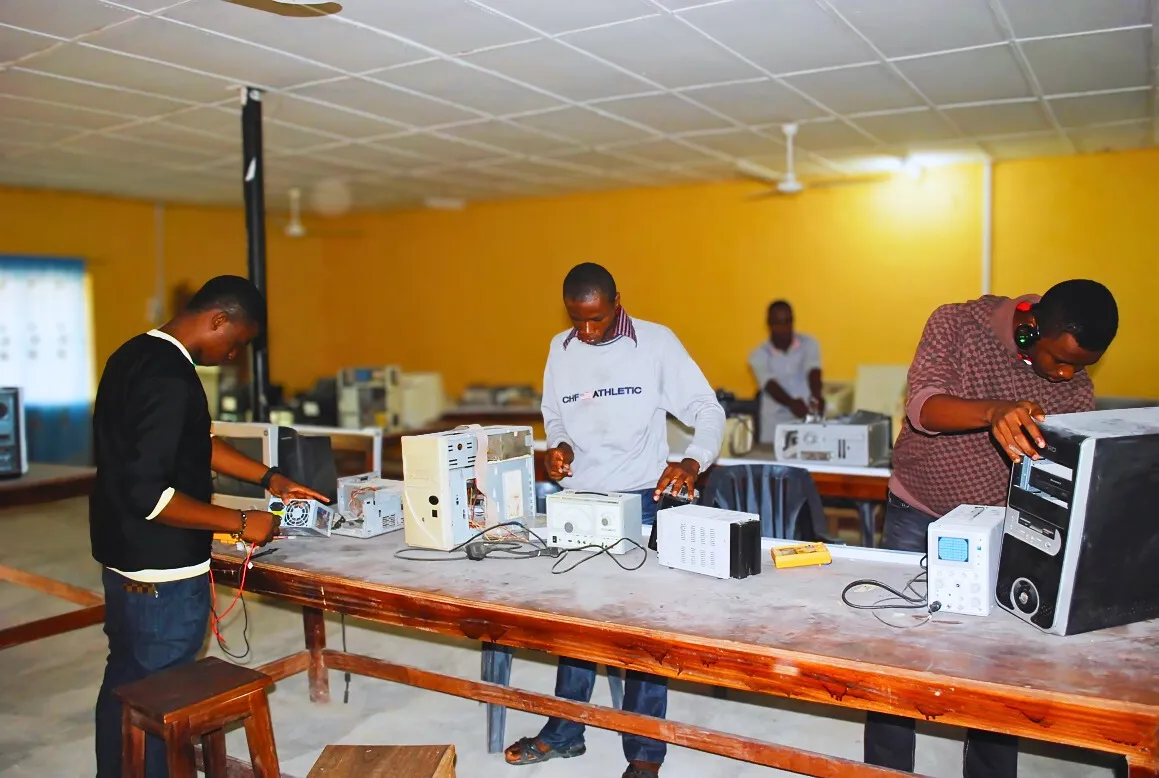
The department is focused on the architecture, design, and implementation of computer systems. We are dedicated to producing research-led graduates capable of developing inventions, products, and services that directly support national technological development.

DIGITAL
Departmental Core

Our Philosophy

The department exists to train students to design, build, and use computer systems while encouraging staff and students to carry out research that leads to practical innovation and technological growth.

Practice and Service

Our philosophy ties technical skill to creativity and industry relevance, ensuring that every solution is grounded in real-world problem solving.

Professional Readiness

Students combine theory, hands-on work, and disciplined academic effort so they can contribute meaningfully to the global digital economy and society.

Programme Design

Strategic Objectives

Impart the critical knowledge and technical skills required for excellence as computer engineers within industry, academia, and public service.

Prepare professionals to lead and innovate in the critical growth areas of computer engineering and system architecture.

Stimulate research and inquiry through close contact with mentors, industry experts, and exposure to cutting-edge information technologies.

Encourage advanced graduate study, interdisciplinary collaboration, and a lifelong commitment to learning and professional growth.

Academic Framework

Programme Standards

Scope

Core Disciplines

  • Hardware and software systems
  • Computer networks and security
  • Information processing algorithms
  • Microprocessor and embedded applications
Admission

Entry Requirements

  • UTME or Direct Entry candidates
  • Credits in Math, Physics, Chem, and English
  • Designed for technology-led professional training
Outcomes

Professional Aim

  • Systems design and evaluation
  • Network transmission expertise
  • Integration of computer capabilities
  • State-of-the-art industrial solutions
Curriculum Design

Programme Focus & Scope

The Computer Engineering programme is meticulously designed to train students in the high-level design and evaluation of complex computer systems, encompassing both hardware and software architecture. This includes the development of advanced computer networks for efficient information transmission and the solving of industrial challenges through integrated computer capabilities.

  • Key Focus: Embedded Systems & Networking
  • Academic Path: B.Eng in Computer Engineering
  • Core Training: Hardware-Software Integration
  • Outcome: Licensed Computer Engineer
Registration & Entry

Admission Requirements

Entry Pathways

The Computer Engineering programme is designed to provide a thorough grounding in the design and evaluation of hardware and software systems. Entry is available via:

  • UTME (Unified Tertiary Matriculation Examination)
  • Direct Entry for qualified diploma holders
  • Minimum credits in Mathematics, Physics, Chemistry, and English

Graduation Pathway

To qualify for the B.Eng degree, students must complete a rigorous curriculum that integrates theory with industrial training, focusing on:

  • Design of computer networks for information transmission
  • Development of state-of-the-art hardware solutions
  • Integration of computer capabilities into industrial systems

Faculty Transfers

Inter-departmental transfers are permitted after one academic year, subject to the following institutional standards:

  • Minimum CGPA of 1.00
  • Submission of formal application to the Registrar
  • Approval by the Faculty and Departmental Boards
  • Final approval by the University Senate
COMPUTER
Future Outlook

Professional Career Pathways

Systems Engineering

Expertise in the design and evaluation of hardware and software systems for the semiconductor and instrumentation industries.

Networks & Telecommunications

Developing and managing high-speed computer networks for the efficient transmission of global information.

Product Design & Innovation

Leading the creation of new hardware products and software services that drive national technological development.

Aerospace & Defense

Applying computer engineering principles to critical systems in aerospace, defense, and security infrastructure.

Biomedical Engineering

Integrating computer capabilities into healthcare through the design of medical instrumentation and diagnostic tools.

Business Information Systems

Designing sophisticated information processing systems for corporate, financial, and public service institutions.

Study Computer Engineering with Purpose

Join a department that blends theoretical depth with practical innovation. Master the architecture of hardware and software to lead the next generation of the global digital economy.

B.EngDegree of Excellence
"Computer Engineering is taught as a practical discipline: technical depth, steady work, and responsibility to the world beyond the classroom."
Scroll to Top