Microbiology
Department
Unlocking the hidden complexities of microorganisms to advance human medicine, secure agricultural yields, and ensure global environmental sustainability.
Microbiology Department
Founded in May 1999 and elevated to full departmental status in November 2004 upon the transition to the Elele Campus, the Department of Microbiology has established itself as a center of rigorous scientific inquiry.
We are distinguished by a strong tradition of academic excellence and a commitment to public discourse, highlighted by our prestigious Annual Lecture series which addresses the most pressing microbiological challenges facing the global community.
Our Philosophy
Our primary objective is the cultivation of refined professionals who embody decency in both morals and education. We expose our students to every facet of microbiology, ensuring they possess the technical mastery required to contribute meaningfully to national development.
la-head>Professional Readiness
Graduates are trained to be professionally competent, self-reliant, and capable of applying theoretical microbiology to solve real-life scientific and health-related problems.
Academic Excellence
By blending rigorous classroom pedagogy with creative research, we empower our students to operate at the forefront of biological sciences.
Strategic Objectives
Provide a comprehensive and sophisticated education in the biology of bacteria, fungi, protozoa, and viruses, bridging the gap between theoretical knowledge and clinical application.
Develop a profound understanding of the pivotal role microorganisms play within the global biosphere and their complex effects on all forms of life.
Cultivate a high level of professional confidence, enabling students to resolve complex microbiological anomalies with precision and minimal supervision.
Ensure students display absolute proficiency in basic laboratory skills and are capable of communicating fundamental microbiological concepts to diverse audiences.
Foster strategic collaborations with international scientific communities on high-impact research projects aimed at the benefit of global humanity.
Programme Standards
Core Disciplines
- Medical Microbiology
- Industrial Microbiology
- Environmental Microbiology
- Virology & Mycology
Entry Requirements
- UTME or Direct Entry candidates
- Minimum credits in core science subjects and English
- Aptitude for biological research
Professional Aim
- Pathogen Detection Expertise
- Antibiotic Resistance Research
- Bioremediation Implementation
- Food Safety Certification
Programme Focus & Scope
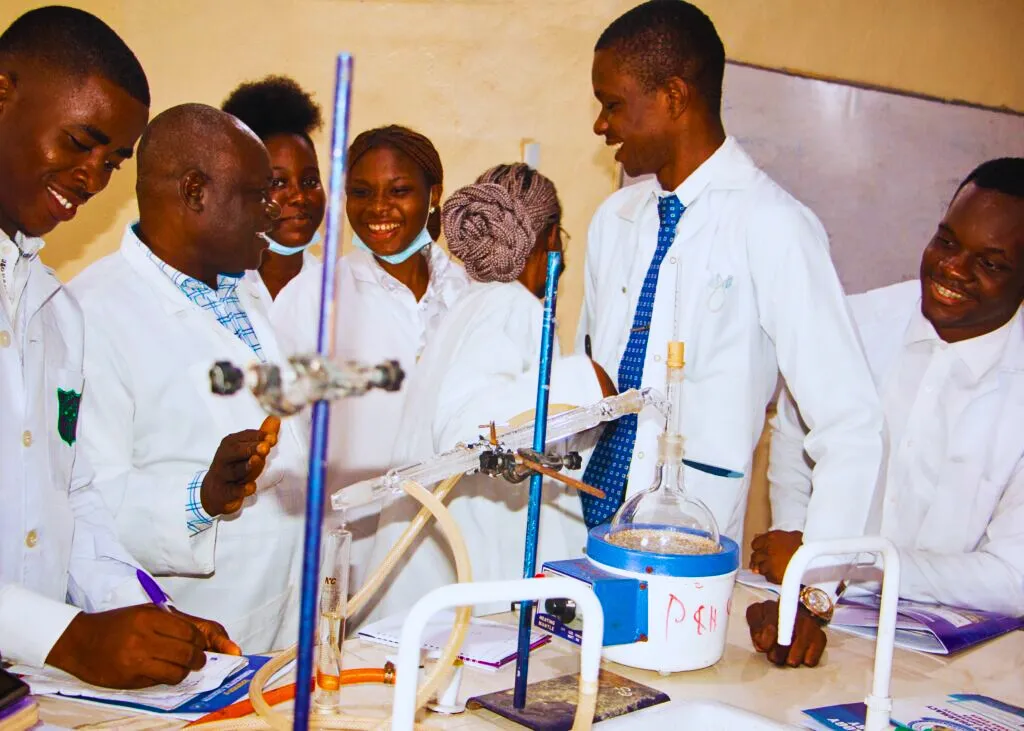
The Microbiology programme is engineered to provide an exhaustive exposure to the theory and practice of the microbial world. By integrating laboratory rigor with contemporary research in medicine, industry, and agriculture, we prepare our graduates to solve real-world challenges and lead innovation in biotechnology.
- Key Focus: Pathogen Control & Microbial Biotechnology
- Academic Path: B.Sc in Microbiology
- Core Training: Professional & Theoretical Mastery
- Outcome: Licensed Microbiologist
Professional Career Pathways
Clinical Microbiologist
Leading diagnostic laboratories to identify infectious agents and manage antimicrobial resistance in healthcare.
Public Health Officer
Designing strategies for outbreak prevention and managing epidemiological surveillance for national health agencies.
Food Safety Auditor
Ensuring global standards of hygiene and microbial safety in food production and pharmaceutical manufacturing.
Industrial Fermentation Expert
Optimizing microbial processes for the production of bio-fuels, enzymes, and high-value organic acids.
Epidemiologist
Studying the patterns and causes of diseases in populations to inform public health policy and medical intervention.
Research Scientist
Conducting pioneering genomic and proteomic research in university labs or biotech firms to solve global health crises.
Study Microbiology with Purpose
Join a department that blends molecular depth with industrial utility. Master the secrets of the microbial world to lead the next generation of scientific discovery.